
- All
- Product Name
- Product Keyword
- Product Model
- Product Summary
- Product Description
- Multi Field Search


Views: 0 Author: Site Editor Publish Time: 2026-06-15 Origin: Site


In high-tolerance machining, workholding operates as the foundational variable for accuracy. You simply cannot out-machine a bad grip. Even minor debris can ruin an entire production run. Lubrication failures inside a Lathe Chuck cause unacceptable runout. You lose clamping force rapidly. Parts get rejected at quality control.
Many facilities confuse routine cleaning for comprehensive maintenance. Worse, they attempt modifications on worn equipment. Operators try to regain lost grip manually. This creates massive safety risks. It also violates basic workplace compliance standards.
This guide outlines strict maintenance protocols. We help you restore accurate gripping safely. You will learn specific diagnostic methods. These tests show exactly when a chuck becomes fundamentally compromised. We also explore the economic framework for replacement. You can finally stop absorbing the costly downtime of constant recalibration.
Proper lubrication and cleaning prevent scroll plate galling, ensuring a baseline Total Indicator Reading (TIR) runout remains within factory specifications.
"DIY" modifications to jaws or scroll plates to increase grip force on aging chucks introduce critical safety hazards and unpredictable tolerances.
When maintenance no longer resolves concentricity issues, upgrading to a precision 3-jaw self-centering or 4-jaw independent chuck is more cost-effective than absorbing the downtime of constant recalibration.
Approximately 80% of standard operations utilize 3-jaw chucks, but achieving tolerances tighter than 0.010 inches often requires evaluating 4-jaw alternatives.
A poorly maintained chuck directly impacts your bottom line. Scrapped materials bleed money daily. Setup times balloon when operators chase tight tolerances. You will also notice accelerated tool wear. Rigid holding prevents harmful vibration. Vibration destroys expensive carbide inserts. Precision machining demands absolute stability from the spindle.
Swarf serves as the primary enemy of workholding. Metal chips mix into the cutting coolant. This mixture forms a toxic, abrasive sludge. It infiltrates the main body effortlessly. This debris creates micro-abrasions inside the mechanism. It heavily scores the scroll plate teeth. It grinds down the master jaws over time. This damage permanently degrades self-centering capabilities. Once the scroll gets compromised, precision vanishes completely.
A properly maintained system should deliver consistent results. It must provide repeatable clamping pressure. Operators should never apply excessive torque. If you need a cheater bar, the equipment is failing. Smooth wrench operation dictates overall accuracy. Grittiness indicates severe internal galling. You must address this friction immediately before catastrophic failure occurs.
Implementation requires a strict Standard Operating Procedure (SOP). Routine wipe-downs do not count as maintenance. You must standardize how operators interact with the equipment.
Cleaning: Mandate the use of soft-bristled brushes. Wipe surfaces clean using non-abrasive cloths. Explicitly warn against using compressed air. Air blasts push fine chips deeper. They lodge inside the critical internal scroll mechanism.
Lubrication Realities: Specify the use of light oils. Use manufacturer-recommended grease on moving parts. Apply it directly to the grease fittings.
The Over-Lubrication Risk: Excessive grease creates massive problems. It traps ambient debris easily. It builds a thick paste inside the housing. This creates a dangerous hydraulic lock effect. Clamping force drops significantly. Parts can eject at high spindle speeds.
Storage and handling require equal attention. When swapping equipment, store units carefully. Keep them in dry, clean environments. Apply a light rust-preventative oil before storage. Always use proper dust covers. Environmental degradation ruins precision just as fast as poor machining practices. A dropped unit often suffers permanent internal deformation.
You must evaluate wear objectively. Maintenance cannot fix heavily deformed metal. You need hard data to justify replacements. Relying on operator feeling leads to inconsistent production quality.
Measuring runout provides the most reliable data point. Follow these steps to evaluate concentricity accurately:
Mount a precision ground test bar securely in the jaws.
Attach a calibrated dial indicator to the tool post.
Position the indicator tip against the test bar surface.
Rotate the spindle manually to capture the full revolution.
Record the Total Indicator Reading (TIR).
If TIR exceeds acceptable shop limits, action is required. Standard limits typically range between >0.005" to 0.010". If a full teardown and deep cleaning fail to fix this, the internal mechanisms are compromised.
You must also identify bell-mouthing in the jaws. This represents uneven wear across the gripping surface. Jaws might only touch the workpiece at the back. Sometimes they only pinch at the front. This causes massive vibration and severe chatter. It ruins part finishes entirely. Bell-mouthing happens naturally over thousands of clamping cycles.
Address the modification risk immediately. Many operators attempt manual modifications. They try to grind worn jaws independently. They seek a "better grip" on dying equipment. Frame this as a severe compliance failure. It introduces critical safety hazards. It produces unpredictable machining tolerances. Worn components must be replaced, never improvised.
When maintenance fails, production managers face a choice. You must evaluate replacement options carefully. Base this decision on specific workpiece geometry. Look closely at target tolerances. Factor in your required setup speed.
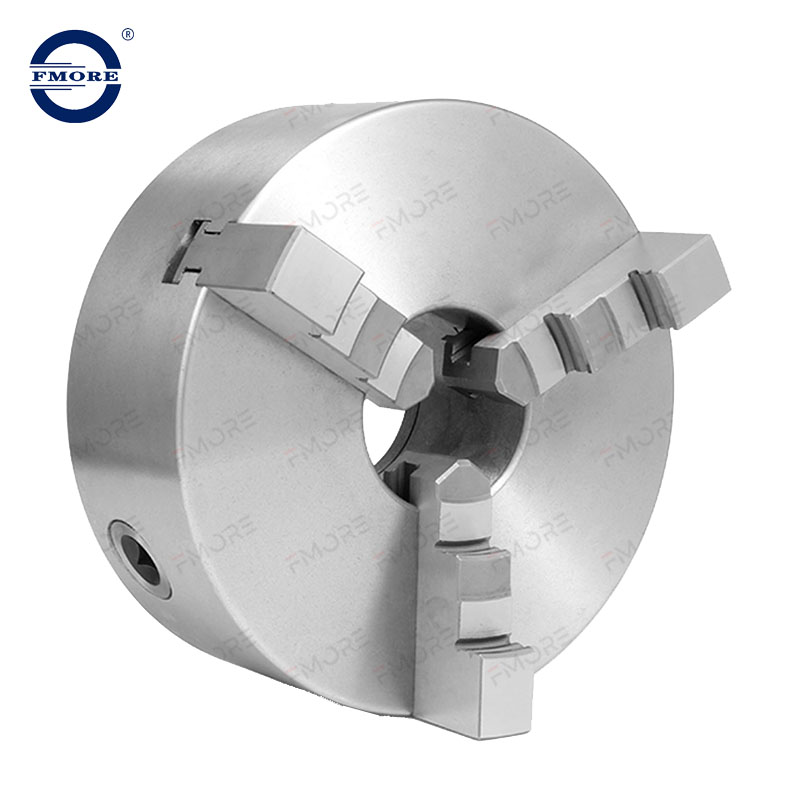
3-Jaw Self-Centering configurations dominate fast-paced production environments. They excel at turning round stock. They hold hexagonal materials perfectly. Their 120-degree jaw spacing offers excellent, balanced grip. This design drastically reduces setup time. Operators secure standard shapes in seconds. However, standard accuracy typically hovers around 0.010 inches.
4-Jaw Independent setups serve a different purpose entirely. They handle heavy blanks safely. They secure irregular, square, or octagonal shapes. Ultra-precise operations require zero runout. The 90-degree spacing allows for independent adjustment. Four dedicated wrench holes exist. Operators dial in accuracy down to 0.001 inches. They support much deeper cut depths. This precision comes at the cost of longer setup times.
| Feature | 3-Jaw Self-Centering | 4-Jaw Independent |
|---|---|---|
| Jaw Spacing | 120 degrees | 90 degrees |
| Target Accuracy | ~0.010 inches | 0 to 0.001 inches |
| Setup Speed | Very Fast | Slow (Manual Dialing) |
| Best Used For | Round, Hexagonal stock | Square, Heavy, Irregular blanks |
You must compare the hidden costs of retaining dying equipment. Keeping a compromised unit wastes massive amounts of labor. Operators spend hours tapping parts into concentricity. You scrap expensive raw blanks constantly. Machine downtime skyrockets. Compare these hidden losses against an upfront capital expense. A new, high-precision unit pays for itself rapidly through increased throughput.
Evaluating suppliers requires strict technical criteria. Verify load capacities for heavy-duty operations. Through-hole operations demand robust ratings. Check the market availability of compatible soft jaws. Always secure a strong manufacturer warranty. The right supplier provides comprehensive technical support.
Take clear next-step actions today. Audit your current workholding performance immediately. Establish a hard TIR threshold for equipment retirement. Stop guessing when to replace tooling. Consult directly with a specialized tooling specialist. They will specify the exact model required for your current production runs. Match the equipment precisely to your shop's demands.
Effective maintenance definitely extends operational life. However, it cannot reverse the physical wear caused by high-volume machining. Scroll plates wear down. Jaws deform. You must accept these mechanical realities. Rigorous cleaning ensures daily safety. Proper lubrication prevents catastrophic part ejections.
Yet, relying on objective runout data ensures long-term profitability. You need hard numbers to guide replacement strategies. Measure your current runout today. Document the findings. Contact a specialized workholding supplier immediately. Let them evaluate high-performance 3-jaw and 4-jaw replacement options for your facility. Upgrade your floor to eliminate wasted setup time.
A: A specialized, high-pressure chuck grease or light machine oil is required. Heavy, sticky greases should be avoided as they attract metal chips and compromise the internal scroll plate.
A: Surface cleaning should occur daily or after every shift. A full teardown and deep clean should be performed every 3 to 6 months, depending on the volume of chips and coolant exposure.
A: Grip loss is typically caused by chip buildup in the scroll threads, over-lubrication, or irreversible bell-mouth wear on the master jaws. If a deep clean does not restore clamping pressure, the chuck likely requires replacement.
A: Yes. 4-jaw independent chucks generally handle heavier blanks and deeper cut depths safely, whereas standard 3-jaw chucks are better suited for light to medium loads requiring rapid self-centering.

