
- All
- Product Name
- Product Keyword
- Product Model
- Product Summary
- Product Description
- Multi Field Search


Views: 0 Author: Site Editor Publish Time: 2026-06-01 Origin: Site


Installing a Lathe Chuck might seem like a routine workshop task. However, true precision begins the moment metal meets metal. A fraction of a millimeter in misalignment can easily derail an entire production run. Improper installation of a lathe chuck causes excessive runout, poor surface finishes, scrapped parts, and severe safety hazards. Operators often rush this process. They ignore the critical relationship between the spindle nose and the mounting plate.
Achieving optimal concentricity and rigid workholding requires exact spindle matching. You must use standardized mounting procedures. Strict adherence to safety protocols is non-negotiable. This guide covers the preparation, mounting, and runout adjustment for standard industry spindle noses. We explore Camlock, Threaded, Tapered, and Flange systems. You will learn actionable steps to mount equipment correctly, safeguard your machinery, and ensure perfect part tolerances from the very first cut.
Spindle Compatibility is Absolute: Matching the lathe chuck to the correct spindle type (Type A, Type D Camlock, Type L, or Threaded) is the first step in avoiding catastrophic failure.
Weight Dictates Handling Protocol: Manual handling is generally safe for 6-inch to 8-inch chucks; 10-inch and larger power chucks require mechanical lifting aids to prevent injury and thread damage.
Micro-Adjustments Drive Precision: Properly adjusting Camlock studs and using alternating, incremental tightening patterns are mandatory for maximizing concentricity.
Never Force Removal: Seized chucks should be removed using integrated jacking screws, never by prying with tools, which damages the spindle nose and adapter plate.
You must verify compatibility before attempting any installation. A mismatched Lathe Chuck poses extreme risks to both the operator and the machine. Spindle noses vary drastically across different lathe models. Understanding these variations helps you make safe, accurate tooling decisions.
Engineers design Type A spindles for heavy-duty applications. They deliver maximum rigidity under extreme cutting forces. You must assess the specific flange configuration before buying an adapter. Note the exact difference between Type A and Type B mounts. Type A features tapped holes only on the outer bolt circle. Type B includes an inner bolt circle as well. This inner circle provides extra holding power for high-torque turning operations. Always match the bolt pattern perfectly.
The Type D series stands as the industry standard for rapid changeouts. Operators love Camlock systems for their speed and reliability. However, this system requires precise evaluation of the cam-stud condition before mounting. Worn studs lead to loose fits. A loose fit creates dangerous vibration at high speeds. You should inspect the cam-lock pins for galling, scoring, or stripped threads.
The Type L series utilizes a distinct long taper paired with a keyway. Sizes typically range from L00 up to L3. This system relies entirely on the taper for accurate alignment. The keyway simply drives the rotation. Because the taper dictates concentricity, you must perform meticulous cleaning before seating the chuck. Even a single speck of dust on the taper will ruin your runout tolerances.
Older manual lathes and specialized woodworking machines often use threaded spindles. Note common sizes carefully. You will frequently see 1-1/4″ x 8tpi or M33x3.5 designations. The necessity of verifying thread pitch cannot be overstated. Forcing a mismatched thread causes cross-threading. This mistake leads to catastrophic spindle wear. Always check the pitch gauge before threading anything onto the nose.
| Spindle Type | Primary Mechanism | Best Application | Key Inspection Point |
|---|---|---|---|
| Type A Series | Flange with bolt circles | Heavy-duty, high-torque turning | Verify inner vs. outer bolt patterns |
| Type D (Camlock) | Cams locking onto grooved studs | Rapid changeouts, toolroom lathes | Check studs for wear and proper depth |
| Type L (Taper Key) | Long taper with drive keyway | High concentricity, traditional lathes | Cleanliness of the mating taper |
| Threaded | Direct internal/external threads | Light duty, woodworking, older lathes | Thread pitch match (e.g., 8tpi) |
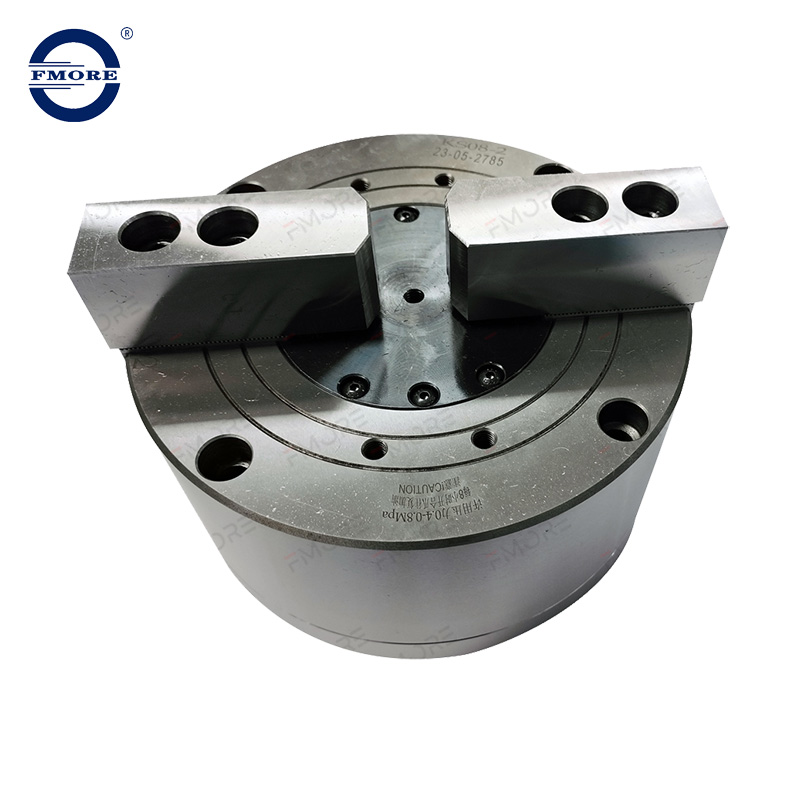
Ergonomics and equipment protection matter just as much as technical precision. Dropping a heavy Lathe Chuck damages the precision-ground bed ways instantly. It also causes severe physical injury. Proper preparation guarantees a secure fit.
Establish strict safety thresholds in your shop. Define exactly when to hand-mount tooling versus when to use mechanical aids. Manual handling is generally safe for 6-inch to 8-inch chucks. These lighter units remain manageable for a single operator. However, 10-inch and larger power chucks easily exceed safe lifting limits. You must deploy a shop crane or a wooden cradle for these units. A wooden cradle sits across the lathe bed ways. It supports the chuck's weight while you align the spindle nose. This prevents injury and protects delicate threads.
Safety extends to the testing phase. Detail the ergonomic requirement for safe standing positions. Never stand directly in front of a newly mounted chuck. Stand out of the direct line of rotation. Usually, the safest position is near the tailstock or behind the machine guard. During initial test spins, an improperly secured jaw or wrench can become a lethal projectile. Keep your body clear until you verify stability.
Emphasize cleanliness at every step. Even microscopic debris on the spindle nose multiplies runout. A tiny chip of brass behind an adapter plate translates to massive wobble at the workpiece. Mandate a strict cleaning regimen. Wipe down tapers, threads, and cam-locks using appropriate solvents. Use lint-free rags. Inspect all surfaces with your bare hand to feel for burrs. Use a fine stone to remove any raised metal before proceeding.
Best Practice: Keep a dedicated brass brush and solvent spray near the headstock for quick cleaning between setups.
Common Mistake: Using compressed air to blow off the spindle nose. This often drives chips deeper into the headstock bearings.
Standard operating procedures prevent costly mistakes. Always use systematic methods when mounting workholding devices. We categorize these steps by the most common mounting requirements found in modern machine shops.
Flat back chucks require an intermediate adapter plate. This plate mates the universal flat back to your specific spindle nose.
Level: Verify the lathe bed is perfectly level before beginning. A twisted bed introduces artificial runout into the system.
Mount: Secure the blank adapter plate directly to the spindle nose. Tighten it fully.
Face: Take a light facing cut on the adapter plate. This step ensures absolute 90-degree perpendicularity to the spindle centerline. Do not skip this step.
Fit: Match the adapter's boss to the lathe chuck recess precisely. It should be a snug, sliding fit. Torque the mounting bolts evenly using a crisscross pattern.
Camlock systems demand specific alignment rules. Hasty installations cause the cams to lock unevenly.
Align: Match the alignment marks on the chuck to the corresponding marks on the spindle. Some chucks have a specific orientation for optimal balance.
Adjust Studs: Address the most common point of failure. You must fine-tune the Camlock studs. Ensure the indicator line sits perfectly flush with the chuck body before locking. If a cam turns past the 6 o'clock position, the stud is too loose. Remove it and turn the stud inward.
Lock: Tighten the cams in a star pattern. This ensures even pressure across the taper. Never tighten them in a simple circle.
Threaded mounts require a delicate touch. Binding threads ruin spindle accuracy permanently.
Thread: Carefully hand-thread the unit to avoid cross-threading. Spin it on smoothly. Never use power to spin a threaded chuck onto the machine.
Locking Sequence: If you use multi-bolt adapters, tighten screws in small, alternating increments. This guarantees the best concentricity and prevents the plate from warping.
Post-installation quality control defines a true machinist. You cannot assume a chuck runs true just because it bolted on smoothly. Precision tuning ensures your turned parts meet drawing tolerances.
Explain the baseline measurement process to your operators. Use a precision ground test pin. Secure it firmly in the jaws. Set up a magnetic base and dial indicator on the carriage. Measure initial runout at two points. First, check the chuck body itself. Second, sweep the indicator along the gripped test pin. This isolates jaw runout from body runout. Record these initial total indicator readings (TIR) to understand the baseline.
Many modern setups use "Set-Tru" style adjustable-runout chucks. These allow you to eliminate almost all TIR through fine micro-adjustments.
Detail the process of slightly loosening the main mounting bolts. The chuck should hold firmly but allow microscopic movement.
Rotate the spindle by hand to find the high spot on the dial indicator.
Use a non-marring mallet (brass, plastic, or dead-blow) to tap the chuck body. Tap it gently into exact alignment, zeroing the dial indicator.
Perform the final lockdown sequence. Tighten the bolts gradually in a star pattern. Re-verify the measurements. The runout should not shift during lockdown.
Adoption risks and maintenance failures plague many shops. A seized chuck halts production entirely. Knowing how to execute a safe extraction prevents costly machine damage.
Never panic when a mounting plate sticks to the spindle. Explain the mechanical principle of jacking screws. Many high-quality adapter plates include threaded clearance holes. You thread bolts into these holes until they contact the spindle face. Turning these jacking screws provides uniform push-out force on stuck adapter plates. This breaks the friction taper evenly. Turn each screw a quarter-turn at a time to prevent binding.
State explicitly to your team: never remove adapters with pliers or pry bars. Prying introduces asymmetric force. It bends adapter plates and gouges precision-ground tapers. Using a hammer and a pry bar causes irreparable damage to the spindle face. If jacking screws are absent, use a brass drift punch to tap the back of the adapter plate gently.
Highlight the root cause of stuck tooling. Stuck components are primarily caused by a lack of lubrication and poor maintenance. Coolant dries out and acts like glue over time. Recommend routine application of anti-seize compounds on threads. You should also schedule frequent cleaning of Camlock mechanisms. A well-maintained taper pops loose with minimal effort.
Correct installation directly impacts operator safety and machining tolerances. A precision lathe cannot produce accurate parts if the workholding foundation remains flawed. You must follow structural mounting procedures every time.
Failing to match the equipment perfectly to the spindle type guarantees problems. Neglecting basic runout checks will compromise all subsequent machining operations. Whether you use a Camlock or a threaded spindle, patience and cleanliness dictate your success.
Evaluate your current workholding setup for wear today. Check the runout on your primary machines. Consult compatibility charts for potential upgrades, or contact technical support to select the right adapter plates for your specific spindle nose.
A: Several factors cause immediate runout. You likely have trapped debris on the spindle taper. Even a small metal chip disrupts alignment. Alternatively, uneven tightening of Camlock studs pulls the body off-center. Finally, if you used a blank adapter, an un-faced adapter plate will transmit its own inconsistencies directly to the workpiece. Always face the plate on the machine.
A: You should avoid this non-standard application. While advanced setups use outboard spiders or lightweight collets to support long stock protruding through the bore, mounting a heavy standard unit on the rear is dangerous. It introduces severe balance issues. It also creates major guarding risks and safety hazards for anyone walking behind the machine.
A: Compression gripping involves clamping the jaws inward onto a tenon or outer diameter. Expanding gripping pushes the jaws outward into a recess. Compression generally provides superior holding force. It is structurally safer for heavy turning and leaves fewer visible marks compared to expanding jaws outward into a fragile recess.

