
- All
- Product Name
- Product Keyword
- Product Model
- Product Summary
- Product Description
- Multi Field Search


Views: 0 Author: Site Editor Publish Time: 2026-06-08 Origin: Site


Every metalworking and woodworking shop relies heavily on rapid, reliable workholding. The self-centering scroll chuck operates as the absolute baseline solution for these demanding environments. It prioritizes rapid deployment over complex, frustrating dialing procedures. Machinists constantly navigate a fundamental tension during daily operations. They must balance setup time against absolute, perfect concentricity. Dialing in an independent setup achieves true center flawlessly. However, the manual process drains valuable production minutes very quickly. Alternatively, a universal scroll mechanism instantly aligns cylindrical parts. It achieves a highly acceptable tolerance for most standard turning applications.
While self-centering mechanisms drastically reduce workpiece changeover time, configuration matters immensely. Selecting the correct jaw layout dictates your ultimate machining success. You must choose between 3, 4, or 6 jaws carefully. This critical choice prevents costly part deformation on the lathe. It also avoids unacceptable runout issues during final finishing passes. We will explore how choosing the right jaw configuration perfectly balances raw speed and final part quality.
Efficiency: Self-centering chucks reduce part-swapping times to seconds by moving all jaws simultaneously via an internal scroll gear.
Shape Compatibility: Ideal for perfectly symmetrical stock (round or hexagonal for 3-jaw; precision square for 4-jaw).
Load Distribution: Upgrading to a 6-jaw self-centering lathe chuck prevents crushing thin-walled tubing and minimizes surface jaw marks.
The Tolerance Catch: They are not a replacement for independent chucks when working with unmachined, highly irregular, or off-center materials.
Manufacturers constantly seek actionable ways to boost operational efficiency on the shop floor. A synchronized mechanism completely transforms how you handle repetitive batch work. We see dramatic setup time reductions across various industries daily. You simply turn a single T-handle key once. An internal scroll gear moves all gripping jaws together simultaneously. Compare this swift motion to dialing in independent jaws manually. An operator might spend five to ten minutes indicating a single raw steel blank. A synchronized model completes the exact same task in mere seconds.
Repeatability becomes utterly effortless during high-volume batch production runs. Operators swap identical blanks rapidly without losing their production rhythm. They never need to re-indicate the center line between part cycles. You unclamp and remove the finished machined piece. You immediately insert the next raw metal blank into the jaws. You tighten the key firmly to secure the grip. The machine is instantly ready to run the next cycle. This repetitive speed drives tremendous shop profitability.
This system also fundamentally lowers the required operator skill floor. Junior machinists can achieve highly acceptable concentricity quickly and safely. They require far less specialized training to start producing good parts. You eliminate the steep learning curve associated with reading sensitive dial indicators. A high-quality Lathe Chuck guarantees consistent centering for all standard turning operations. It effectively lowers the barrier to entry for high-volume production output.
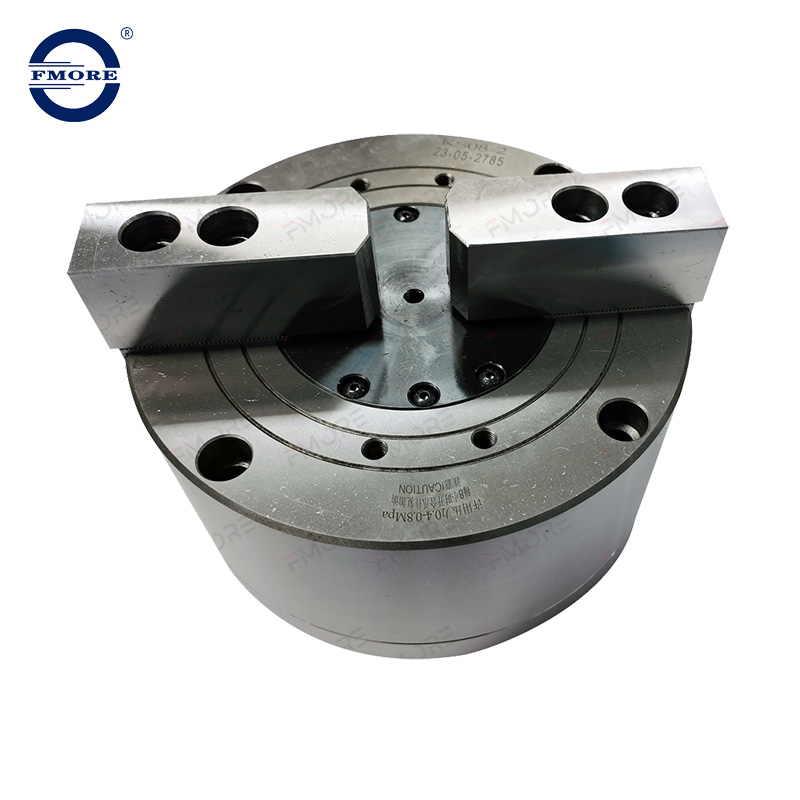
This unit represents the absolute industry standard across the globe. It easily holds cylindrical and hexagonal stock securely during heavy cuts. The synchronized 120-degree layout dominates most conventional shop floors today. Most manual engine lathes arrive from the factory equipped exactly this way.
The primary advantage is raw, unmatched operational speed. It features the fewest moving internal parts to maintain long-term. You can swap materials rapidly without second-guessing the clamping mechanism. The primary limitation simply comes down to overall surface contact area. A three-point stance inherently offers a lower gripping area than other options. You cannot apply this robust style to extremely delicate materials. Heavy clamping pressure easily mars softer metals or crushes plastic tubing.
Many specialized shops require dedicated solutions for square or octagonal stock. This configuration explicitly serves those precise geometrical needs. It remains heavily favored in repetitive, high-volume woodworking environments. Woodworkers frequently turn decorative table legs, finials, and square pommels. Wood naturally compresses well under mechanical pressure. It readily absorbs minor shape variations during the clamping sequence. Therefore, four synchronized jaws work perfectly for raw timber blocks.
Metalworking, conversely, presents a completely different and dangerous reality. You must firmly acknowledge the severe "false lock" risk in machining. Rough square steel stock often holds minor dimensional variances. The synchronized jaws always close simultaneously around the material center. They might only tightly grip two opposing, slightly larger sides. The other two slightly smaller sides float dangerously loose inside the jaws. This creates a major safety hazard during spindle rotation. You risk throwing heavy metal parts violently across the shop.
Precision manufacturing shops often upgrade directly to a 6-jaw setup. Toolmakers designed this specific variant for highly fragile, delicate components. It grips thin-walled aerospace tubes flawlessly without inducing permanent ovality. It securely holds tiny micro-parts and highly polished, previously finished surfaces.
The distinct advantage centers entirely on superior load distribution. Six contact points spread the radial clamping pressure incredibly evenly. This prevents localized part distortion on sensitive aluminum or brass cylinders. It completely eliminates heavy, ugly jaw marks during second-operation finishing passes. You preserve the precise surface finish from the first operation.
You must logically accept certain physical trade-offs here. The initial purchase price runs significantly higher than standard three-jaw models. The entire assembly weighs much more due to added internal components. This extra rotating mass heavily reduces your maximum safe spindle RPM. Furthermore, the tighter internal scroll clearances create frequent maintenance headaches. The mechanism is highly prone to abrasive chip clogging.
| Configuration | Primary Material Shape | Key Advantage | Major Limitation |
|---|---|---|---|
| 3-Jaw | Round, Hexagonal | Fastest setup, simple maintenance | Prone to marking soft materials |
| 4-Jaw (Self-Centering) | Precision Square, Wood | Rapid square stock loading | False-lock hazard on rough metal |
| 6-Jaw | Thin-walled, Finished Cylinders | Even pressure, no deformation | Heavy, expensive, prone to clogging |
Every single machine tool possesses strict physical boundaries. You must intimately understand them to ensure high part quality continuously.
First, objectively evaluate Total Indicator Runout (TIR) degradation over time. We must demonstrate total transparency regarding workholding accuracy here. All self-centering mechanisms feature some inherent, unavoidable runout. A brand new, premium unit typically shows 0.003" of variance out of the box. This operational condition steadily worsens as the internal scroll gear naturally wears down. They absolutely cannot achieve the "dead true" zero of independent designs. You still need an independent setup for critical, aerospace-level precision work.
Second, seriously consider the inability to handle eccentric workpieces. Synchronized jaws permanently restrict your creative machining options. You cannot perform intentional off-center turning operations. Machining a custom cam shaft is physically impossible using this mechanism. The jaws strictly force the workpiece into a single, common centerline. Irregular castings require different workholding strategies entirely.
Finally, you face considerable, ongoing maintenance overhead. Fine cutting chips constantly infiltrate the rotating scroll plate mechanism. Manufacturing environments producing cast iron dust suffer greatly from this issue. Abrasive particles quickly destroy precise internal component tolerances. You must physically dismantle and thoroughly clean the assembly regularly. Frequent teardowns keep the jaws moving smoothly and accurately.
Expert machinists constantly invent highly creative shop solutions. They successfully bypass standard equipment limitations using proven, traditional shop techniques.
Using custom soft jaws offers incredible daily versatility. Machinists frequently bolt on unhardened aluminum or mild steel jaws. They cut exact, inverse part profiles directly into the soft metal. This securely holds non-standard, cast, or highly fragile parts perfectly on center. You guarantee perfect center alignment automatically because you bored them in place. Soft jaws absorb clamping forces safely and gently. They successfully protect delicate external threads and fine surface finishes.
Experienced turners often rely heavily on the "two-jaw fixed" independent method. Sometimes you desperately need rapid part swapping capabilities. However, you cannot ever trust synchronized models on rough square stock. Experts mount a standard 4-jaw independent model instead. They indicate the first part center perfectly using a dial test indicator. To swap parts later, they only back off two adjacent jaws. You insert the new rough blank and tighten those exact same two jaws. The setup retains high centering accuracy while radically slashing changeover time.
Sometimes you must abandon traditional jaw designs entirely. Think about implementing precision collet systems like 5C or ER styles. These easily beat a standard scroll mechanism for high-speed, small-diameter bar work. Collets grip the entire component circumference evenly and firmly. They allow significantly higher, safer spindle speeds due to lower rotating mass. We strongly recommend collets for production runs under one inch in diameter.
You must evaluate your current machine specifications incredibly carefully. Hasty, uninformed purchases always lead to frustrating compatibility errors. Look deeply at the following technical criteria before making a final decision.
Match Spindle Mount Compatibility Exactly.
You must accurately identify your lathe's exact spindle nose thread. Many smaller hobby machines use basic 1" x 8 TPI threaded configurations. Larger industrial lathes utilize precision backplate adapters instead. You might need a specific D1-4 or D1-6 camlock mounting plate. An incorrect mount makes the expensive tool completely useless.
Balance Weight vs. Machine Capacity.
Never oversize your primary workholding equipment. We often see excited buyers mounting massive 6-jaw units on lightweight lathes. This mistake severely strains the internal drive motor. It drastically limits your maximum safe turning speeds. Excessive overhanging weight destroys precision spindle bearings prematurely.
Evaluate Overall Jaw Versatility.
Look very closely at the offered jaw design. Solid one-piece reversible jaws offer perfectly adequate basic functionality. However, two-piece jaws provide massive, unparalleled flexibility. They allow incredibly easy swapping between hardened step jaws. You can quickly bolt on specialized dovetail jaws for woodworking projects. You can rapidly mount custom soft jaws for specialized tasks.
Adhere strictly to these essential workholding best practices:
Clean the spindle threads or camlock pins thoroughly before mounting.
Apply light machine oil to the scroll mechanism routinely.
Never use an extended cheater pipe on the tightening key.
Verify material symmetry visually before engaging synchronized jaws.
We can confidently summarize the major purchasing decision. A self-centering mechanism absolutely serves as an indispensable tool. It guarantees rapid, high-speed operation and delivers standard, repeatable concentricity. However, buyers must rigorously match the jaw count strictly to their daily material profile. Metal behaves entirely differently than compressible wood. Solid steel bars require vastly different clamping forces than thin-walled brass tubes. You fully justify the steep investment by choosing the correct, purposeful design.
Take immediate, practical action today. Evaluate your most frequently machined materials right now. Review the detailed spindle specifications documented in your current machine manual. Determine your shop's true, realistic accuracy requirements before finalizing any purchase.
A: No. Synchronized jaws strictly require symmetrical contact points to function properly. If the material is uneven, the jaws cannot close fully or grip safely. Irregular shapes always require an independent chuck, faceplate, or customized soft jaws.
A: No. They are never universally interchangeable out of the box. They require specific internal threading or dedicated adapter backplates. You must precisely match the drive spindle nose of your specific lathe model.
A: Several common factors cause accuracy loss. The internal scroll gear naturally wears down from repeated friction. Abrasive chip buildup prevents the jaws from seating correctly. Additionally, frequent over-tightening can permanently spring the jaws out of true alignment.

